Every Fraction of a Cent Adds Up: The Real Wealth-Building Edge Solana Traders Have Over Ethereum Users
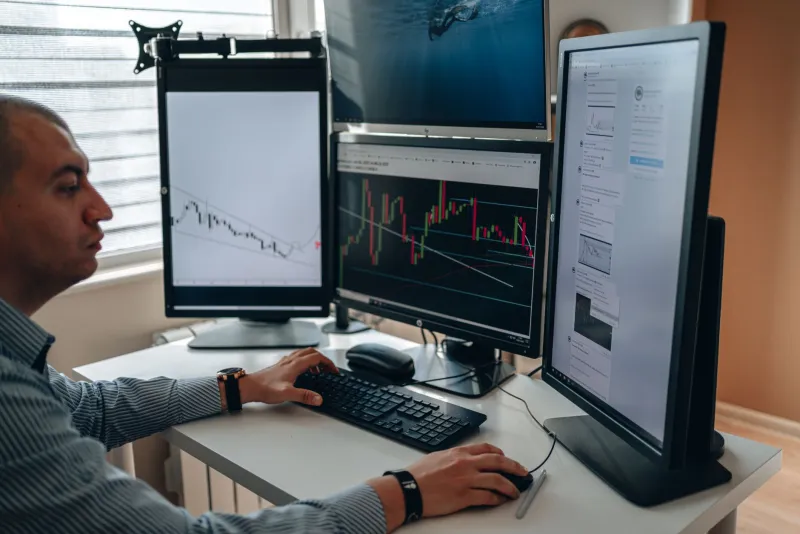
There's a cost hiding in plain sight that most active DeFi traders refuse to talk about. Not impermanent loss. Not slippage. Not even the occasional rug pull. It's the grinding, relentless drag of transaction fees — and depending on which blockchain you're operating on, it could be quietly destroying your returns.
For Solana users, this is actually good news. Here's why.
The Math That Changes Everything
Let's get concrete. On Ethereum, a simple token swap during moderate network activity can run anywhere from $5 to $30 in gas fees. During peak congestion — think a hot NFT mint or a major market move — that same swap can cost $80 or more. Rebalancing a three-position portfolio? You could easily burn $150 before you've made a single trade work in your favor.
On Solana, that same swap costs roughly $0.00025. Not a typo. A quarter of one-tenth of a cent.
Now do the math across a realistic active trader's month. Say you're executing 50 transactions — swaps, liquidity adjustments, yield harvests, maybe a couple of leveraged positions opened and closed. On Ethereum at an average of $15 per transaction, that's $750 gone before your portfolio even has a chance to grow. On Solana, that same 50 transactions costs you about $0.01.
Over a year? An Ethereum active trader at that pace is potentially surrendering $9,000 in fees alone. A Solana trader surrenders pocket change.
Why This Matters Beyond the Obvious Savings
The financial math is clear, but the behavioral economics angle is where things get really interesting — and honestly, a little underappreciated in most community discussions.
When transactions are expensive, traders change how they behave. They hesitate. They let a position ride longer than they should because closing it and reopening it feels wasteful. They skip rebalancing when the numbers say they should rebalance, because the gas fee makes the juice not worth the squeeze. They hold a losing position because cutting it costs money they can see, while the ongoing loss is abstract.
Solana flips that psychology entirely. When a transaction costs a fraction of a cent, you execute when the strategy calls for it — not when you've finally convinced yourself the fee is justified. That freedom to act on conviction rather than cost calculus is genuinely undervalued.
Community members on PekoSolana's Discord have talked about this shift firsthand. One trader described moving from Ethereum to Solana DeFi as feeling like "taking the training wheels off my own decision-making." He wasn't spending mental energy calculating whether a rebalance was worth the gas. He just rebalanced.
Real Portfolio Impact: A Hypothetical But Realistic Breakdown
Let's build out a scenario that reflects what a moderately active Solana DeFi user might look like in 2025.
Imagine you're running a $20,000 portfolio split across three positions: a SOL/USDC liquidity pool, a single-sided staking position, and a small allocation to a newer yield farm you're actively managing. You're harvesting rewards weekly, rebalancing monthly, and occasionally rotating out of underperforming positions.
On Ethereum, that behavior pattern — weekly harvests, monthly rebalances, quarterly rotations — would run you roughly 65-80 transactions annually. At even a conservative $10 average fee, you're at $650-$800 in annual friction costs. That's 3.25% to 4% of your starting portfolio, gone before your yields even begin compounding.
For that same portfolio to break even on Ethereum, your yield strategies need to outperform by at least 4% just to cover the cost of managing them. On Solana, your break-even hurdle is essentially zero.
That's not a marginal advantage. For a $20,000 portfolio targeting 15-20% annual yields, a 4% fee drag is the difference between a genuinely strong year and a mediocre one.
The Compounding Effect Nobody Talks About
Here's the part that gets genuinely exciting when you think it through: low fees don't just save you money in the short term. They change what's possible with compounding.
When you can afford to harvest and reinvest yield weekly instead of monthly (because the transaction cost doesn't eat your harvest), you're compounding more frequently. Weekly compounding at 15% APY versus monthly compounding at 15% APY produces a measurable difference over a year — and over multiple years, that gap widens considerably.
Solana's fee structure essentially enables a compounding frequency that would be economically irrational on Ethereum. That's a structural advantage that grows over time, not just a one-time saving.
Is There a Catch?
Fair question, and worth addressing directly. Solana has had network congestion issues historically — periods where transactions failed or required higher priority fees to land. The network has matured significantly, and the team's ongoing infrastructure work has made reliability substantially better. But it's not perfect, and during extremely high-demand moments, priority fees can temporarily push costs higher.
That said, even during elevated conditions, Solana fees remain a fraction of Ethereum's baseline. The structural advantage holds even in worst-case Solana scenarios versus average Ethereum conditions.
What This Means for Your Strategy
If you're currently on the sidelines of active DeFi participation because Ethereum fees made it feel like a game rigged toward whales, Solana genuinely changes that calculus. The strategies that only made sense for six- and seven-figure portfolios on Ethereum — frequent rebalancing, aggressive yield harvesting, multi-position management — are accessible to regular people running $5,000 to $25,000 portfolios on Solana.
That's the real story here. Solana's fee structure doesn't just save active traders money. It democratizes the strategies that generate meaningful wealth-building returns, and it removes the psychological friction that causes even smart traders to make suboptimal decisions.
The cents you're not spending on fees? They're compounding in your portfolio instead.