Forget Stripe Fees: How Solana Is Becoming the Payment Rail Small Business Owners Didn't Know They Needed
Forget Stripe Fees: How Solana Is Becoming the Payment Rail Small Business Owners Didn't Know They Needed
Imagine you run a small coffee shop in Austin. Every time a customer taps their card, you're quietly handing somewhere between 1.5% and 3.5% of that transaction to a payment processor — plus a flat per-transaction fee on top. On a $6 latte, that's potentially 20-25 cents gone before you've even thought about labor, rent, or the price of oat milk.
Now multiply that across hundreds of transactions a day, seven days a week, fifty-two weeks a year. Suddenly those "small" processing fees are a meaningful line item eating into already thin margins.
This is the quiet frustration driving a growing number of US small business owners and freelancers to take a second look at Solana-based payment solutions — not because they're crypto ideologues, but because the math is starting to make sense.
The Problem with Legacy Payment Infrastructure
PayPal, Stripe, Square — these platforms built genuinely useful products and deserve credit for making digital payments accessible to small businesses in the first place. But their fee structures were designed for a world where moving money required significant infrastructure, intermediaries, and reconciliation overhead.
Here's a quick reality check on what US merchants are typically paying:
- Stripe: 2.9% + $0.30 per transaction for online payments
- PayPal: 3.49% + $0.49 for standard transactions
- Square: 2.6% + $0.10 for in-person card transactions
- Settlement time: Typically 1-2 business days for standard payouts (instant payouts cost extra)
For a freelance graphic designer invoicing $5,000 a month, PayPal fees alone could run $175-200. For a food truck doing $800 in Saturday sales, Square takes $21 before the owner sees a dollar.
These aren't devastating numbers in isolation. But in an economic environment where small business margins are already under pressure from inflation and rising input costs, every percentage point matters.
Enter Solana Pay: The Basics
Solana Pay is an open-source payments framework built on the Solana blockchain. It allows merchants to accept payments in SOL or USDC (a dollar-pegged stablecoin) directly, peer-to-peer, with no intermediary taking a cut.
Here's what makes it genuinely different:
Transaction costs: A Solana transaction typically costs around $0.00025. Yes, a fraction of a cent. Whether you're sending $5 or $5,000, the network fee is essentially negligible.
Settlement speed: Transactions confirm in under a second. Not "pending" for a day — actually confirmed, in your wallet, within roughly 400 milliseconds. For merchants used to waiting 24-48 hours for funds to clear, this is a meaningful operational difference.
No chargebacks: Blockchain transactions are irreversible. For merchants who've dealt with fraudulent chargebacks — a genuine headache in e-commerce — this is a significant advantage, particularly for digital goods and services.
Open protocol: Solana Pay isn't a company with a CEO who can change the fee schedule next quarter. It's an open standard that any developer can build on.
Who's Actually Using This Right Now?
Adoption is still early, but it's real and growing — particularly in communities with high crypto literacy.
Freelancers and digital service providers have been among the earliest adopters. A copywriter billing international clients, for example, can request payment in USDC and receive funds almost immediately without PayPal's international transfer fees eating into the invoice. Several members of the PekoSolana community who freelance in design, development, and content have shared that they now offer USDC payment as a standard option alongside traditional methods.
E-commerce merchants selling to crypto-native audiences have integrated Solana Pay checkout options, particularly for digital products. The combination of zero chargebacks and instant settlement is compelling for anyone selling software, art, or courses.
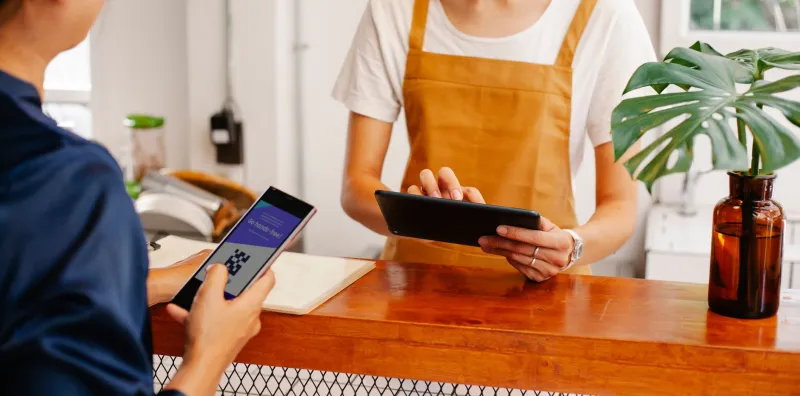
Pop-up vendors and market sellers in cities with active crypto communities — think Miami, Austin, New York, Denver — have experimented with QR code-based Solana Pay setups at craft fairs and food markets. The UX has improved significantly; customers scan a QR code, approve the transaction in a wallet app like Phantom, and it's done.
Small online retailers are beginning to explore Solana Pay as a checkout option, particularly as plugins and integrations for popular platforms like Shopify have become more accessible.
The Honest Tradeoffs
We're not here to oversell this. Solana Pay is genuinely promising, but it's not a perfect drop-in replacement for Stripe — at least not yet.
Volatility risk with SOL: If you accept payment in SOL and the price drops 15% before you convert to dollars, you've effectively given a discount. The solution most merchants adopt is accepting USDC (a stablecoin pegged 1:1 to the dollar), which eliminates this risk — but it adds the step of converting USDC to dollars when you need to pay expenses in fiat.
Customer adoption: The majority of Americans don't have a Solana wallet. Until that changes, you can't replace your card terminal with a Solana Pay QR code and expect to serve every customer. It works as an additional option, not a wholesale replacement.
Tax complexity: The IRS treats cryptocurrency payments as property transactions. Accepting SOL or USDC as payment creates taxable events that require careful record-keeping. This is solvable — tools like Koinly and CoinTracker help automate crypto tax reporting — but it's a real administrative consideration.
No consumer protection layer: The irreversibility that protects merchants from chargebacks also means customers can't dispute a transaction if something goes wrong. Trust is the substitute, which works fine for established relationships and less well for first-time transactions.
Getting Started: A Practical Path Forward
For small business owners curious about dipping a toe in, here's a sensible starting point:
- Set up a Phantom or Backpack wallet — free, takes five minutes, and gives you a Solana address you can receive payments to.
- Generate a Solana Pay payment request using the Solana Pay QR code generator (available at solanapay.com) — you can specify the exact amount in USDC for a frictionless checkout experience.
- Offer it as an alternative payment option alongside your existing methods. Market it to your crypto-savvy customers first.
- Use a service like Helio or Sphere if you want a more polished merchant experience with invoicing, recurring payments, and fiat off-ramp options built in.
- Talk to a tax professional familiar with crypto before you start accepting meaningful volume.
The Bigger Picture
The shift happening here isn't really about crypto ideology. It's about infrastructure. Payment rails built decades ago for a different technological environment are increasingly showing their age — and the fees they charge reflect the inefficiency baked into their architecture.
Solana's speed and cost structure represent what payment infrastructure looks like when you build it from scratch with modern technology. The practical benefits — sub-second settlement, negligible fees, global accessibility — are real and quantifiable.
For American small business owners who've spent years quietly accepting that processors get to skim 2-3% off every sale, that's worth paying attention to. The technology is ready. The adoption curve is the remaining challenge — and curves like this tend to accelerate faster than most people expect.
The PekoSolana community will keep tracking how this unfolds. If you're a small business owner who's already experimenting with Solana Pay, we'd genuinely love to hear your experience.