While America Sleeps, Solana Traders Are Printing: The Global Liquidity Playbook
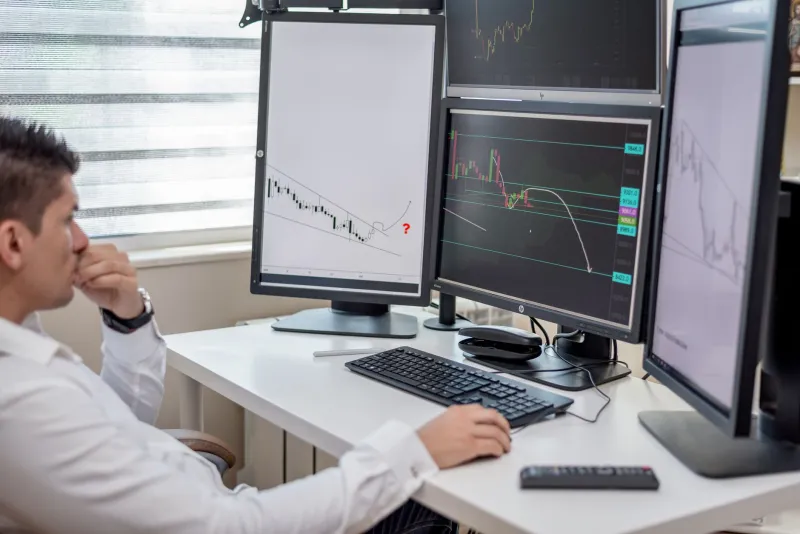
Most people in Ohio or Texas are deep into their second REM cycle by the time Tokyo's crypto desks are running at full tilt. But a growing slice of the Solana community has figured out that those quiet overnight hours — roughly 8 PM to 4 AM Eastern — aren't dead time at all. They're an opportunity.
Crypto never closes. You already knew that. What's less obvious is that liquidity, volume, and price discovery on Solana-based DEXs don't move in a flat line around the clock. They pulse. And if you know when the pulse is strongest, you can position accordingly.
Why Global Market Hours Actually Matter on a 24/7 Chain
One of the biggest mental traps in DeFi is assuming that because a blockchain doesn't have a closing bell, market dynamics are uniform across all hours. They're not — not even close.
Asia-Pacific trading sessions (roughly 7 PM to 3 AM Eastern) and European sessions (roughly 3 AM to 11 AM Eastern) generate their own distinct waves of buying pressure, liquidation cascades, and token-specific momentum. A Solana-based token with heavy Korean or Japanese retail interest can see 30–40% of its daily volume compressed into a four-hour window that most American traders completely miss.
That creates pricing inefficiencies. And on a chain as fast and cheap as Solana, those inefficiencies are actually exploitable in ways they never could be on Ethereum.
The Community Playbook: What Traders Are Actually Doing
Over in various Solana Discord servers and Telegram groups, a loose community of "overnight DeFi" traders has developed some surprisingly structured approaches. A few recurring strategies stand out.
Liquidity pool rebalancing windows. Automated market makers like Raydium and Orca see their pool ratios shift meaningfully during Asian sessions, especially for pairs involving tokens with strong Asian retail bases. Community members who monitor these shifts can provide liquidity at favorable entry points — or pull it before unfavorable ones — by tracking pool imbalance data via tools like Step Finance or Birdeye.
Cross-exchange price lag. When a token pumps hard on a centralized exchange during Tokyo hours, the equivalent Solana DEX pool sometimes takes several minutes to fully catch up. Traders who've built price alert systems (using platforms like Dialect or custom Python scripts pulling Jupiter aggregator data) can catch these brief windows.
Funding rate arbitrage on Solana perps. Platforms like Drift Protocol offer perpetual futures on Solana. Funding rates fluctuate based on global demand, and savvy traders have noted that rates often spike during Asian sessions when leveraged longs pile in. A short position held through those windows can collect meaningful funding while hedging spot exposure.
Building Your Overnight Stack Without Losing Your Mind
Here's the honest part: most people can't actually stay up until 3 AM on a Tuesday night watching charts. The traders who are winning at this aren't doing it manually — they're automating.
A few tools the community keeps coming back to:
- Kamino Finance's automated vaults let you set parameters for liquidity concentration and rebalancing so the protocol does the heavy lifting while you sleep.
- Dialect notifications integrate directly with wallets and can ping your phone when a pool hits a certain price ratio or your position crosses a threshold.
- Solana-native bots — some community members have shared open-source scripts on GitHub that monitor Jupiter routes and flag arbitrage windows above a certain basis-point spread.
The key mental shift is moving from active overnight trading (exhausting and unsustainable) to configured overnight exposure — where your positions and automation do the work and you review results in the morning with coffee.
Risk Management: Don't Let the Time Zone Edge Become a Time Zone Trap
For every trader who's found an edge in Asian-session price action, there's another who got wrecked by a liquidation cascade they slept through. The overnight window cuts both ways.
A few rules that experienced community members emphasize:
- Never leave leveraged positions unhedged overnight. If you're running perps on Drift or Zeta Markets, either set tight stop-losses or close out before you sleep. Liquidations happen fast on Solana.
- Size down for overnight holds. The same position size you'd be comfortable managing during waking hours should shrink by at least 50% if you're not going to be watching it.
- Stick to high-liquidity pools. Thin liquidity during low-volume hours means wider spreads and more slippage. SOL/USDC and SOL/USDT pools on Orca and Raydium are safer playgrounds than obscure long-tail pairs.
- Log everything. The traders who iterate fastest are keeping simple spreadsheets — entry time, exit time, session (Asia/Europe/US), outcome. Patterns emerge quickly.
Is This Actually Worth It?
Honestly? That depends on your situation. If you're working a day job and trying to squeeze alpha out of your free hours, building a semi-automated overnight strategy on Solana is one of the more interesting edges available to retail traders right now. The chain's speed and low fees make small-margin opportunities viable in ways that simply aren't possible on slower, more expensive networks.
But it's not a passive income button. It requires setup time, ongoing calibration, and a genuine understanding of what you're doing with your capital.
The community members who are thriving in this space aren't the ones who stumbled into it hoping for easy money. They're the ones who spent a few weeks paper-trading the Asian session, built their automation stack carefully, and treated it like a part-time project with real stakes.
Solana's global liquidity is real. The question is whether you're going to be asleep when it moves — or positioned for it.